Visuals
http://visual.merriam-webster.com/house/structure-house.php
joi, 27 martie 2014

English literature - Lord of the Flies
http://www.bbc.co.uk/bitesize/higher/english/lord_of_the_flies/
http://www.bbc.co.uk/bitesize/higher/english/lord_of_the_flies/
luni, 6 ianuarie 2014
Michael Vince - Advanced Language Practice
http://www.scribd.com/doc/136817424/Michael-Vince-Advanced-Language-Practice-With-Key-CAE-English-Grammar-and-Vocabulary-2003
http://www.scribd.com/doc/136817424/Michael-Vince-Advanced-Language-Practice-With-Key-CAE-English-Grammar-and-Vocabulary-2003
Exercitii de traducere
Fosta "Engleza cu cheie" a Lidiei Vianu
http://editura.mttlc.ro/carti/vianu.english-for-everyone.pdf
http://editura.mttlc.ro/carti/vianu.english-for-everyone.pdf
joi, 19 decembrie 2013
sâmbătă, 16 noiembrie 2013
Integrating Technology in English Language Instruction
FOREWORD
"Integrating Technology in English Language Instruction" is a methodology course organised by Pearson Education. I took part in it at the end of October this year (2013) courtsy of our Ministry of National Education. I decided to submit some of my work related to this course on this blog (which I started a while ago and planned to dedicate entirely to translations) for several reasons: lack of time to design a new one and its convenient title. Trans-latio - this course is about how we, teachers, trans-late technology in the English class. "Trans" (Latin) means "across", "beyond". "Latio" comes from "fero, ferre, tuli, latum" which means to carry, bring, tell, relate. The books that I chose as blog cover are a mere translation of our experience between two covers. Their motley image is a mirror of the dappled beauty of the world; and however attractive books may be, it is always good to remember that they were called "le cendre de la vie" (the ashes of life) by Simone de Beauvoir.
"Integrating Technology in English Language Instruction" is a methodology course organised by Pearson Education. I took part in it at the end of October this year (2013) courtsy of our Ministry of National Education. I decided to submit some of my work related to this course on this blog (which I started a while ago and planned to dedicate entirely to translations) for several reasons: lack of time to design a new one and its convenient title. Trans-latio - this course is about how we, teachers, trans-late technology in the English class. "Trans" (Latin) means "across", "beyond". "Latio" comes from "fero, ferre, tuli, latum" which means to carry, bring, tell, relate. The books that I chose as blog cover are a mere translation of our experience between two covers. Their motley image is a mirror of the dappled beauty of the world; and however attractive books may be, it is always good to remember that they were called "le cendre de la vie" (the ashes of life) by Simone de Beauvoir.
duminică, 21 aprilie 2013
Nowadays it is quite fashionable amongst translation agencies to prepare self-evaluation forms for their potential collaborators - freelance translators. These forms contain a question related to mistakes, much of the sort "How many mistakes should a good translation contain, in your opinion?'" And another question that I saw recently : "What would be a standard number of errors upon which a contract with a freelance translator should be terminated?" (I quote from my memory, and I do it elegantly, sometimes these questions are badly and offendlingly worded) Such questions make me believe the management of the said translation agencies have no idea about evaluation or how to set up an evaluation system of the translation ordered by them. And instead of getting information from other people or agencies or institutions abroad which do have some expertise and know-how in this area (it would not occur to them to take a peek into the neighbour's courtyard) they ruthlessly try to steal ideas from people in need of making money. Needless to say, no difference is made in the aforementioned forms between a minor error and a serious mistake, no example is given to this purpose. How can one expect fair retribution for their work from such agencies? However, their effort is commendable as there is another category of agencies which do not even bother to seek fair evaluation. Because on the one hand evaluation requires work and effort and on the other their "heads" simply lack the proper knowledge of foreign language(s). The only criteria in selecting collaborators is "the smaller the price asked per page, the better."

sâmbătă, 20 aprilie 2013
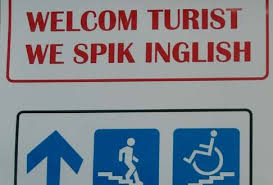
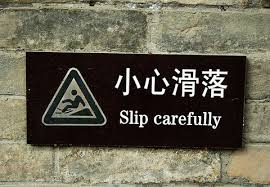
Error ratio in translation varies quite a lot. However, if you respect yourself you should not make more than 4 minor errors per 1,000 words - which corresponds to a Language Quality Index (LQI) of 90 as measured by the Language Quality Inspection (LQI) form. Exceeding this ratio would lead to customer complaints an also affect the perception of the text.





marți, 25 decembrie 2012


Real estate
When it comes to real estate, one challenge is to translate "numar cadastral". Proz.com has evolved a lot however the only solution it offers is cadastral number. British English uses "field number" or "parcel number" or"field parcel number" whereas American English prefers "property parcel number".

Commercial translations
I learned a lot about commercial translations not from dictionaries but by reading sample contracts on www.onecle.com. Business contract, consumer forms and other documents offer a view on the world, a very down-to-earth view on our surrounding and dealings with other people.
http://www.onecle.com/


My first encounter with translation that raised my awareness upon the matter (for otherwise I could simply mention my teenage years when I was listening to various songs in English and tried to comprehend the lyrics) took place after reading Galsworthy's Forsyte Saga in Romanian when I managed to find one of the volumes in English. The title of the first part was "The Indian Summer of a Forsyte". My challenge at the time was to understand what an Indian summer was and it conveyed the nostalgia pervading the book. Later, when listening to Joe Dassin's song... l'ete indien brought to my mind the Indian Summer of a Forsyte as a celebration of loss.
http://www.gutenberg.org/files/2594/2594-h/2594-h.htm

Many people associate translation with the idea of profitability: when
they think of translation, their thought automatically leads them to
commercial translation. To me, however, translation is primarily linked
to learning a foreign language and at times, I cannot help feeling like a
child who wonders at first seeing a grasshopper in the grass when I
find myself in front of a new document which needs to be translated. And
after having made translations for so many years, I believe I forged
myself a motto which I can make public provided that my readers forgive
its triviality:
Learning a foreign language is a perpetual surprise.

Learning a foreign language is a perpetual surprise.
Abonați-vă la:
Postări (Atom)