https://learnenglishkids.britishcouncil.org/en/short-stories
http://www.agendaweb.org/listening/short-stories-for-children.html
http://www.agendaweb.org/listening/short-stories-for-children.html
http://www.cookie.com/kids/games/learn-to-count.html
Lazy Jack
https://www.youtube.com/watch?v=8v3h-sOf1Hc
Fixed tales
https://www.youtube.com/watch?v=80tjJmXc0sI
Fractured tales
https://www.youtube.com/watch?v=E4ikEBaMOBE
The emperor's new clothes
https://www.youtube.com/watch?v=z9mQoJU-6I0
https://www.bing.com/videos/search?q=fairytales+for+young+children&view=detail&mid=9E68A812B6B1CC35405E9E68A812B6B1CC35405E&FORM=VIRE
Disney
https://www.youtube.com/watch?v=Olo923T2HQ4
https://www.youtube.com/watch?v=2DrKmpuKhKE
https://www.youtube.com/watch?v=3U7adg_yPLM
Three little pigs
https://www.youtube.com/watch?v=r3rTQTacg3w
Gingerbread man
https://www.youtube.com/watch?v=L80V2yGhjzs
marți, 14 martie 2017

luni, 16 ianuarie 2017
sâmbătă, 10 decembrie 2016
space
https://www.youtube.com/watch?v=mQSVYoNVPRw
http://www.dailymotion.com/video/x1ym9b7_daffy-duck-ep-70-duck-dodgers-in-the-24%C2%BDth-century_fun
http://www.dailymotion.com/video/x2i2bly_duck-dodgers-19-the-fudd_tv
http://www.dailymotion.com/video/x2i2cx2_duck-dodgers-17-talent-show-a-go-go-the-love-of-a-father_tv
http://www.dailymotion.com/video/x1ym9b7_daffy-duck-ep-70-duck-dodgers-in-the-24%C2%BDth-century_fun
http://www.dailymotion.com/video/x2i2bly_duck-dodgers-19-the-fudd_tv
http://www.dailymotion.com/video/x2i2cx2_duck-dodgers-17-talent-show-a-go-go-the-love-of-a-father_tv
luni, 7 noiembrie 2016
duminică, 6 noiembrie 2016
joi, 3 noiembrie 2016
miercuri, 26 octombrie 2016
NEGATION
NEGATION
I. We can negate:
1) The verb:
e.g. He is NOT an engineer.
He canNOT
swim.
I do NOT
know him.
2) A part of
the sentence:
a) Su e.g. Nobody
came yesterday.
b) NP e.g. He is nothing to me.
c) Compl. e.g. I saw nothing there.
I spoke to nobody.
He is nowhere to be
found.
II. We negate with negative pronouns, adjectives, adverbs.
No one anyone
Nobody anybody
Nothing =NOT+ anything
Never ever
Nowhere anywhere
Neither either
III. Other negative items: little, few, only, seldom, rarely, hardly, scarcely, barely, without.
e.g. He seldom
speaks to anyone.
Few people know anything about him.
I have hardly any money.
I can hardly see in the dark.
|
+
|
-
|
|
I met some
friends of mine.
|
I didn’t meet any
friends of mine.
|
|
I’ve read about this somewhere.
|
I haven’t read about this anywhere.
|
|
They’ve eaten already.
|
They haven’t eaten yet.
|
|
He’s still
sleeping.
|
He isn’t sleeping any longer.
|
|
He sometimes
phones me.
|
He never/seldom
phones me.
|
|
They read too many books.
|
They don’t read very
many books.
(Ei nu citesc prea multe carti.)
|
|
Mary is coming, too.
|
Mary isn’t coming either.
|
Negative patterns:
1) NEITHER … NOR …
e.g. We ate neither
liver nor pork. = We didn’t eat either liver or pork.
2) EITHER … OR …
e.g. You can have either
liver or pork.
3) BOTH … AND …
e.g. We ate both
liver and pork.
NOTE: No none
means ‘nimeni’; none has the same translation as neither, the difference between them being that none implies the selection out of more than two members, whereas neither always implies neither of the two.
HALLOWEEN
LUMPKIN THE PUMPKIN
https://youtu.be/eHTe0kiuCHI
Winnie the Pooh Boo to you too
https://youtu.be/M_JHnOPVMMA
„Happy TrickOween!!! ***The Berenstain Bears" Trick or Treat”
https://youtu.be/bWIwfCbFKKI
https://youtu.be/eHTe0kiuCHI
Winnie the Pooh Boo to you too
https://youtu.be/M_JHnOPVMMA
„Happy TrickOween!!! ***The Berenstain Bears" Trick or Treat”
https://youtu.be/bWIwfCbFKKI
BOOKS AND STORIES
Vizionează „The Fox and The Grapes - Fairy tales and stories for children” pe YouTube
https://youtu.be/feFDx8cZGNc
Vizionează „The Best Collection of Fairy Tales - Animated Version” pe YouTube
https://youtu.be/rNLtXjBlN28
https://youtu.be/feFDx8cZGNc
Vizionează „The Best Collection of Fairy Tales - Animated Version” pe YouTube
https://youtu.be/rNLtXjBlN28
joi, 22 ianuarie 2015
It was extremely pleasurable to be
awarded a Comenius grant (http://www.llp-ro.ro/userfiles/Candidaturi_aprobate_R3_com_mof13.pdf) to take part
in the individual mobility course USING
NEW TECHNOLOGY FOR TEACHING ENGLISH which took place in Ipswich between 22
February-2 March 2014. I was the only English teacher coming from Romania and
our group consisted of both one-week and two-week trainees. Meaning the
two-weekers spent another week in Ipswich during which they visited British
schools. My fellow trainees came from Sweden, Poland, Italy, Hungary, Germany,
Finland and Bulgaria.
The
course was organized by International Study Programmes and included a trip to
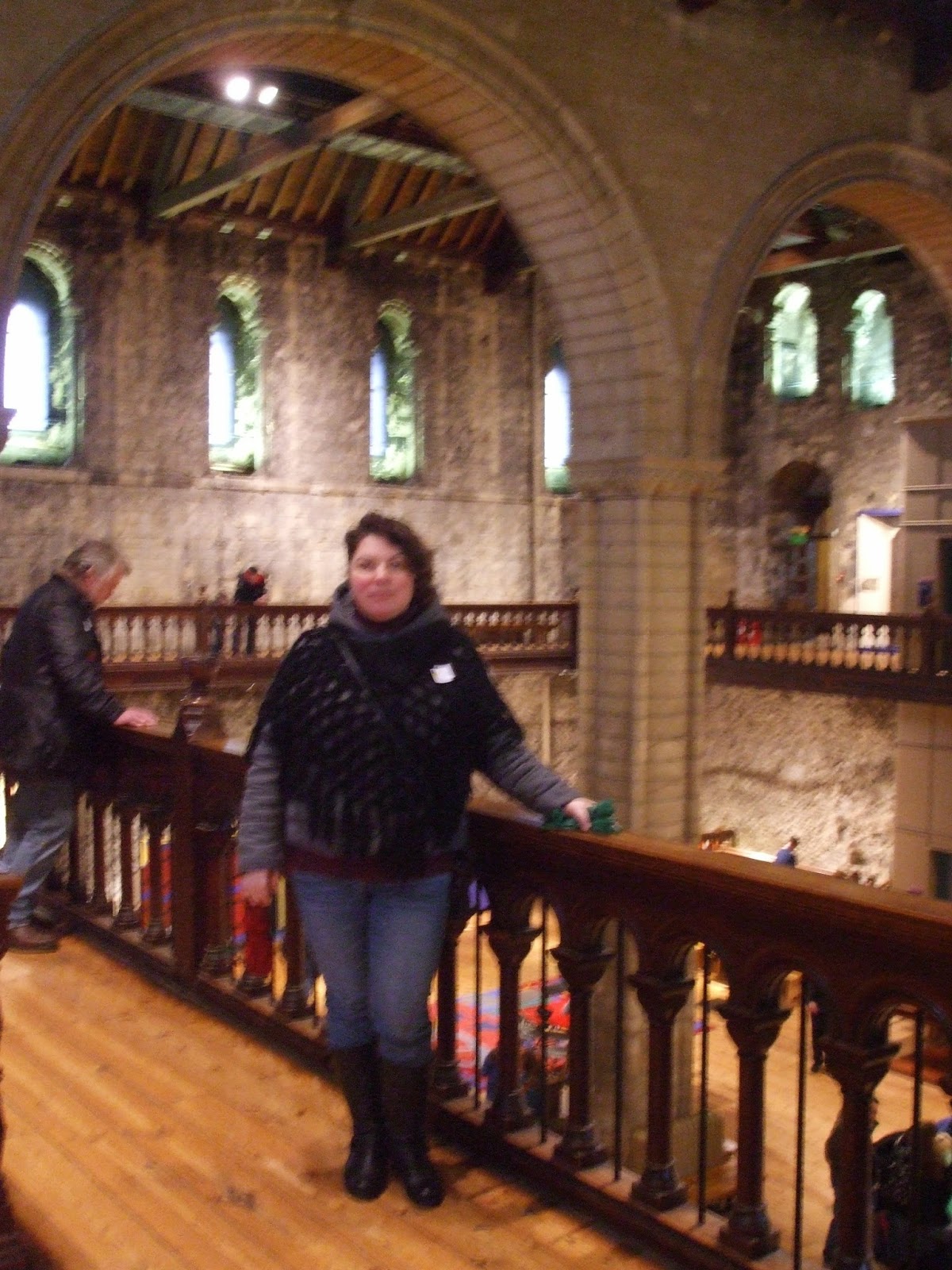
Norwich and I took another trip – the one I was actually looking forward to –
to Cambridge. Our trainer was Graham Workman (www.grahamworkman.com) and since the course dealt with internet technology a lot,
you will find loads of resources on his web site and the advantage is that they
are neatly classified. The course was prefaced by Gema Embiata with a view on
the English education system.
What
I really enjoyed about it besides seeing a lot of places and people was the
group work. We managed to work together and exchange ideas and I remember how
much we enjoyed and talked to each other when preparing Powerpoint
presentations or Prezi-s. Comenius Programme was one of chances and communication,
of broadening horizons. Welcome Erasmus +.
It was extremely pleasurable to be
awarded a Comenius grant to take part in the individual mobility course entitled
USING NEW TECHNOLOGY FOR TEACHING
ENGLISH which took place in Ipswich between 22 February-2 March 2014. My fellow
trainees came from Sweden, Poland, Italy, Hungary, Germany, Finland and
Bulgaria.
The
course was organized by International Study Programmes and included a trip to
Norwich and I took another trip – the one I was actually looking forward to –
to Cambridge. Our trainer was Graham Workman (www.grahamworkman.com) and since the course dealt with internet technology a lot,
you will find loads of resources on his web site and the advantage is that they
are neatly classified. The course was prefaced by Gema Embiata with a view on
the English education system.
What
I really enjoyed about it besides seeing a lot of places and people was the
group work. We managed to work together and exchange ideas and I remember how
much we enjoyed and talked to each other when preparing Powerpoint
presentations or Prezi-s.




projectwork designed by the students of 11c and 10b in 2013-2014
the topic: 30-second ads of the self; my ideal journey
they used prezi.com, animoto.com, powerpoints, videos
you can view some of them at :
http://prezi.com/bdoioa5aa_uw/hellomy-name-is-raifura-alexandru/
http://prezi.com/pur9ikddogae/myself/
http://prezi.com/pur9ikddogae/myself/
http://animoto.com/play/nfi812X9Kv9C5Frf1L865w
http://prezi.com/kpid6u9uyrao/my-ideal-journey/
http://prezi.com/g5rclfr0abcb/my-ideal-journey/
http://prezi.com/qi_vr0nvgfwk/edit/?auth_key=rbitj87&follow=svjvble8ttrn#31_30863873
prezi.com/g5rclfr0abcb/my-ideal-journey/
http://prezi.com/0czwohizxorz/co/?utm_campaign=share&utm_medium=copy
http://prezi.com/wasdtpmpxwpx/edit/?auth_key=3sr3qlg&follow=nadbxvx6oy7s#31_30863873
http://animoto.com/play/TVSQUocbH2PZu8zf1A9VHA
Flashback on
Comenius – fast forward on Erasmus +
Prof. Sabina Stanila
Colegiul National “Mihai Eminescu”, Bucuresti
“Teacher, I saw you are part of a Comenius Group on Facebook. Tell us about Comenius.”
And I tell them. “Do you remember that I was gone for a week at the end of February. I told you I was in England on a training course and the funding came from the EU through this Comenius programme. This was the former EU’s education programme which was replaced by Erasmus+. You can find information on Erasmus + on the website of our national agency for community programmes in the field of education and professional training. Through this new programme you can study abroad when you are university students.”
“How do we do that?”
“You choose a university abroad where you want to study and then you have to download an electronic application form from the national agency website. You fill it in, it’s not easy, but you can do it and there are lots of documents to help you. Also the national agency employees are ever so very helpful. After you fill it in you just press the submit button in the form, and that’s it, you have submitted the form. If your application scores high, you are awarded funding for your studies abroad. All education expenses are paid through Erasmus +.”
“Can you give us the website?”
I write the website on the blackboard.
“Thank you.”
Their eyes have opened now, are wider than before as if to absorb the broad horizons of Erasmus + which can be their window to the world. A new perspective, a new opportunity, a new way. And incidentally today this new phrase has come up again during the lesson: “step off the beaten track.” Our lesson is about narratives, I teach them “flashback,” and give them a pretext for writing a brief narration in which they have to use, inter alia, “off the beaten track.”
Perhaps this is the best dissemination – the retelling of my Comenius story. It is the story of an individual mobility – which means that I applied for a training course in Ipswich, the UK, and was granted the funding. Therefore at the end of February this year (2014) I went to Ipswich which offered me the additional advantage of visiting the neighboring towns of Cambridge and Norwich. Mention should be made of another exciting aspect which the concept of mobility implies prior to and after the event: you have to make all the necessary arrangements, manage the budget you are granted. You are the manager of your own individual project.
The training course itself covered a topicality issue – using technology for the teaching of English. It lasted one week and the organisers (International Study Programmes) did a great job altogether but mostly by putting together participants enrolled on the one-week and the two-week courses. There were 17 participants from Bulgaria, Poland, Finland, Italy, Germany, Sweden, Hungary. I feel my teaching skills and knowledge have improved thanks to the courses taught by Graham Workman (and you can test some of the resources and methods incorporating technology at www.grahamworkman.com), I have become more confident, I saw some beautiful and salient places of the Anglo-Saxon culture and civilization, I made so many friends with which I keep in touch and we can work together in future partnerships.
And so the story goes.
Prof. Sabina Stanila
Colegiul National “Mihai Eminescu”, Bucuresti
“Teacher, I saw you are part of a Comenius Group on Facebook. Tell us about Comenius.”
And I tell them. “Do you remember that I was gone for a week at the end of February. I told you I was in England on a training course and the funding came from the EU through this Comenius programme. This was the former EU’s education programme which was replaced by Erasmus+. You can find information on Erasmus + on the website of our national agency for community programmes in the field of education and professional training. Through this new programme you can study abroad when you are university students.”
“How do we do that?”
“You choose a university abroad where you want to study and then you have to download an electronic application form from the national agency website. You fill it in, it’s not easy, but you can do it and there are lots of documents to help you. Also the national agency employees are ever so very helpful. After you fill it in you just press the submit button in the form, and that’s it, you have submitted the form. If your application scores high, you are awarded funding for your studies abroad. All education expenses are paid through Erasmus +.”
“Can you give us the website?”
I write the website on the blackboard.
“Thank you.”
Their eyes have opened now, are wider than before as if to absorb the broad horizons of Erasmus + which can be their window to the world. A new perspective, a new opportunity, a new way. And incidentally today this new phrase has come up again during the lesson: “step off the beaten track.” Our lesson is about narratives, I teach them “flashback,” and give them a pretext for writing a brief narration in which they have to use, inter alia, “off the beaten track.”
Perhaps this is the best dissemination – the retelling of my Comenius story. It is the story of an individual mobility – which means that I applied for a training course in Ipswich, the UK, and was granted the funding. Therefore at the end of February this year (2014) I went to Ipswich which offered me the additional advantage of visiting the neighboring towns of Cambridge and Norwich. Mention should be made of another exciting aspect which the concept of mobility implies prior to and after the event: you have to make all the necessary arrangements, manage the budget you are granted. You are the manager of your own individual project.
The training course itself covered a topicality issue – using technology for the teaching of English. It lasted one week and the organisers (International Study Programmes) did a great job altogether but mostly by putting together participants enrolled on the one-week and the two-week courses. There were 17 participants from Bulgaria, Poland, Finland, Italy, Germany, Sweden, Hungary. I feel my teaching skills and knowledge have improved thanks to the courses taught by Graham Workman (and you can test some of the resources and methods incorporating technology at www.grahamworkman.com), I have become more confident, I saw some beautiful and salient places of the Anglo-Saxon culture and civilization, I made so many friends with which I keep in touch and we can work together in future partnerships.
And so the story goes.
Abonați-vă la:
Postări (Atom)